Temporary Fencing

Our Temporary Fencing category is dedicated to providing flexible, durable solutions for short-term fencing needs. Ideal for construction sites, events, and any situation requiring quick and efficient perimeter establishment, our temporary fencing options are easy to set up and dismantle. We offer a range of products, including lightweight and robust fencing panels, ensuring your temporary boundary needs are met with professionalism.


Showing the single result

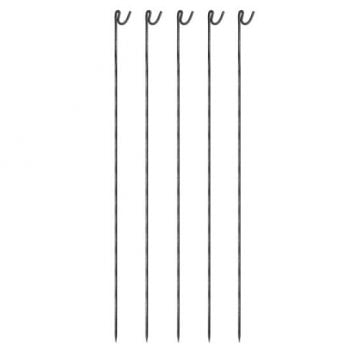
Fence Pin 1.2M

£4.30£3.58 Incl. VATExcl. VAT
Add to basket

Choose from our selection of temporary fencing products to find the ideal solution for your specific requirements. Whether you need to secure a construction site or set up barriers for an outdoor event, our products are designed to offer maximum utility and convenience. Furthermore, our team is available to assist with any queries, helping you select the most appropriate temporary fencing for your situation.

FAQ

What is a fence pin and how is it used for temporary fencing?

A fence pin is a steel rod with a loop at the top, driven into the ground to support barrier mesh, netting, or plastic fencing. The mesh is threaded through or hooked onto the loops of a line of pins to create a quick temporary boundary. Pins are driven with a hammer or post driver and can be pulled and reused. They are a lightweight, low-cost option for marking site perimeters, protecting areas during events, or keeping people away from hazardous ground - and significantly faster to install than any post-and-rail or panel system.

What should I use fence pins with?

Fence pins work with orange PVC barrier fencing, plastic mesh, or similar flexible materials that can be threaded through the top loop. They are not designed to support rigid panels or heavy wire mesh under tension. For anything requiring a more robust temporary barrier - such as a construction hoarding or a secure site perimeter - a steel panel system with feet and couplers is the appropriate choice, though this is outside our current range. For a permanent boundary, see our timber fence posts and fence panels.

How far apart should fence pins be spaced?

Spacing depends on the material being supported and the ground conditions, but 1.5 m to 2 m centres is typical for standard barrier mesh on firm, flat ground. On soft ground or in exposed conditions, closer spacing - around 1 m - gives better stability and reduces the risk of pins leaning or pulling free. Each pin is 1.2 m long; roughly 400-500 mm goes into the ground, leaving around 700-800 mm above ground to suit standard barrier mesh heights.